
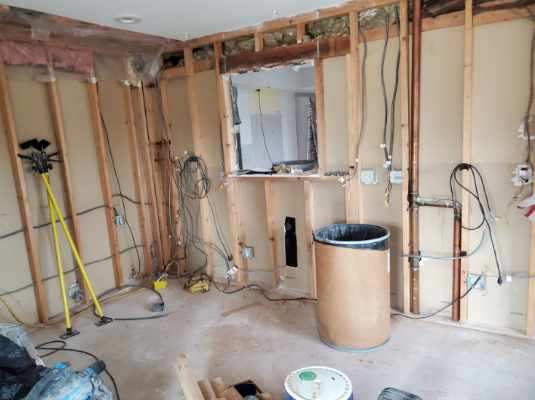
Pipes in an exterior wall freeze because they sit right next to cold outdoor air, often with little insulation and some air leaking in around them. On the coldest nights, open the cabinet doors under the sink, let a thin trickle of water run, and keep the heat on. If the same sink freezes every winter, a remodel that improves insulation and air sealing or moves the plumbing to an inside wall can solve it for good.
Why does the same sink freeze every winter?
Kitchen sinks are often placed under a window on an outside wall. That puts the supply lines in the coldest part of the house. Several things usually work together:
- Cold air leaks. Gaps where pipes pass through the wall, the floor or the rim joist in the basement let outdoor air blow directly on the lines.
- Insulation in the wrong place. If insulation is missing, compressed or installed between the pipe and the warm room, the pipe stays close to outdoor temperature.
- Closed cabinets. The cabinet doors block warm room air from reaching the pipes, so the space under the sink can be much colder than the kitchen.
- Wind. A wall that faces the prevailing winter wind loses heat faster.
Many older homes in the area were built with little or no insulation in exterior walls, and Northern Indiana cold snaps and freeze and thaw cycles keep testing the weak spots. Illinois Extension notes that the pipes most at risk are typically those near outer walls, in crawl spaces or in the attic, and recommends sealing leaks that let cold air reach pipes.
How do I keep pipes in an exterior wall from freezing tonight?
The Indiana Office of Utility Consumer Counselor offers clear steps for preventing frozen pipes. The ones that matter most for a sink on an outside wall:
- Open the cabinet doors under the sink so warm room air reaches the pipes. Move cleaning products out of reach of children and pets.
- Let water trickle. When temperatures are at zero or below, let a thin, steady stream run from a faucet, ideally one on an exterior wall, especially overnight. Illinois Extension suggests trickling both hot and cold.
- Keep the heat on. If you travel, do not set the thermostat below 55 degrees, and ask someone to check the house.
- Know where your main shutoff valve is and make sure everyone in the house can reach and turn it.
- Disconnect garden hoses and store them inside.
Avoid placing space heaters inside cabinets or near anything that can burn.
What is the safe way to thaw a frozen pipe?
If you turn on the faucet and get only a trickle or nothing at all, the line may be frozen. Follow the official guidance rather than improvising:
- Shut off the water at the main valve right away, in case the pipe has already cracked.
- Call a licensed plumber. The OUCC warns that thawing without professional help can cause costly damage.
- The OUCC says a hair dryer may be used only after consulting a plumber and only if you are not standing in water.
- Never use a torch or any open flame. Both the OUCC and Illinois Extension warn against it, and Illinois Extension also cautions about electric shock around standing water.
- After the pipe is thawed, turn the water back on slowly and watch closely for leaks, ready to shut the main valve again.
What should I do if a pipe bursts or leaks after a thaw?
A frozen pipe often cracks without leaking until it thaws. Illinois Extension notes that a crack of about one eighth of an inch can release up to 250 gallons of water a day, so speed matters.
- Shut off the main water valve.
- Stay safe around electricity. Keep out of standing water near outlets or appliances, and call an electrician if water has reached wiring.
- Call a licensed plumber to repair the line, and contact your insurance agent. Take photos before cleanup.
- Dry everything quickly. The EPA advises that you dry water damaged areas and items within 24 to 48 hours to prevent mold growth. Pull out the cabinet contents, open the toe kick if possible, and run fans and a dehumidifier.
- Watch for mold. Water often soaks the cabinet floor, the subfloor and the insulation inside the wall, where you cannot see it. A musty smell or staining in the following days means moisture is trapped.
The EPA says homeowners can usually clean a moldy area of about 10 square feet. Larger areas, or significant water damage, call for a professional. Our article on emergency mold remediation and HEPA air scrubbing explains that process.
Can a remodel stop the pipes from freezing for good?
Often, yes. If you are already planning kitchen work, or the wall is open after a burst, it is a good moment to fix the cause instead of fighting it every winter. Options include:
- Air sealing. Sealing gaps where pipes and wires pass through the exterior wall, the floor and the basement rim joist cuts off the cold drafts that do most of the damage.
- Better insulation in the wall. When the wall is open, insulation can be placed so the pipes sit on the warm side, between the insulation and the kitchen, not between the insulation and the outdoors.
- Moving the plumbing. Routing supply lines through an interior wall, or relocating the sink to an island or inside wall, takes the pipes out of the cold entirely. This work should always be done by a licensed plumber.
- Rethinking the layout. A kitchen remodel is the natural time to decide whether the sink belongs on that outside wall at all.
Our guide to what drives kitchen remodel costs explains why moving plumbing affects the budget, and our kitchen remodel planning guide helps you think through layout changes. The same thinking applies to a bathroom sink or shower on an outside wall.
When to call a professional
Call a licensed plumber any time a pipe is frozen, cracked or leaking. Call a remodeling contractor when the same wall freezes year after year, when water has damaged cabinets, flooring or drywall, or when mold appears after a leak.
B&E Home Renovations handles kitchen remodeling, bathroom remodeling and mold remediation. Plumbing and electrical work should always be done by licensed professionals. Estimates are free, and our work is licensed, insured and covered by a lifetime warranty.
Questions homeowners ask
How cold does it have to be for pipes to freeze?
It varies with insulation, air leaks and wind. The OUCC recommends letting faucets trickle when temperatures reach zero or below, but poorly protected pipes can freeze sooner.
Is it safe to use a space heater under the sink?
Do not put a space heater inside a cabinet. Opening the cabinet doors and keeping the house heated is the safer approach.
Should I insulate the pipes under my sink?
Pipe insulation, installed per the manufacturer instructions, can help, but it cannot keep a pipe warm if cold air is blowing on it. Sealing air leaks matters as much.
If your kitchen sink freezes every winter or a thaw has left damage behind, we can help you plan a lasting fix. Request a free estimate or call (574) 413-8702. We serve Osceola, South Bend, Mishawaka, Granger, Notre Dame and Elkhart.