
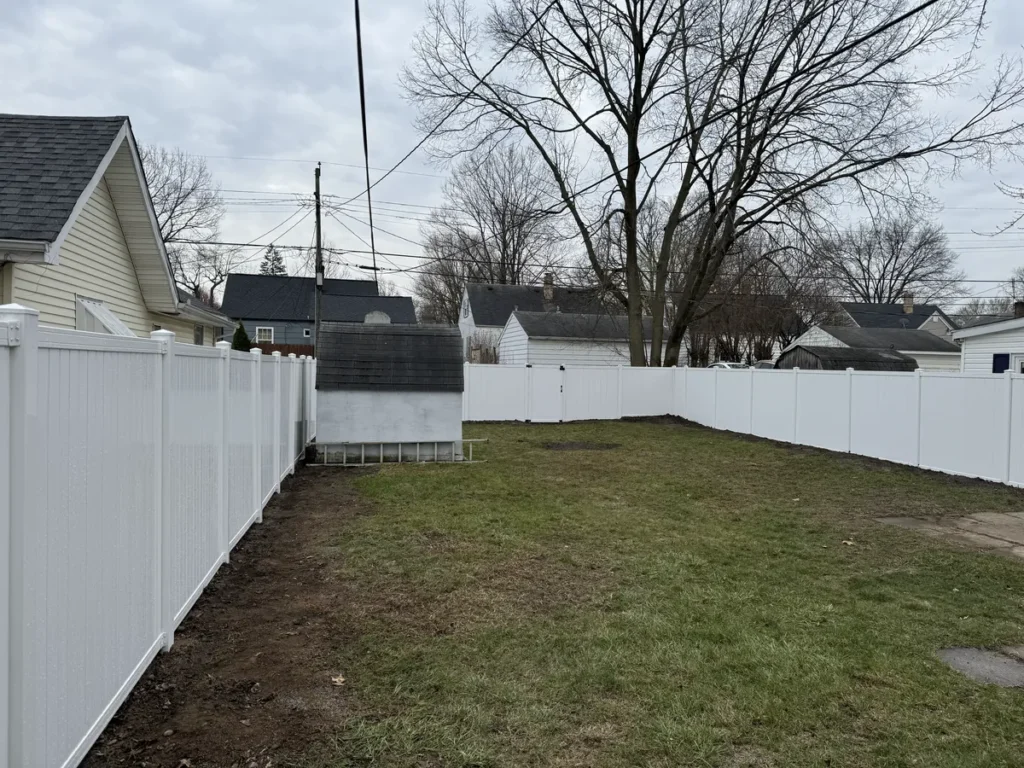
In most cases, yes. The St. Joseph County Building Department and the City of South Bend require a permit for fences in the city and in unincorporated St. Joseph County, which includes Granger, except on agriculturally zoned lots. Mishawaka reviews fences through an Improvement Location Permit, and Elkhart requires a zoning clearance permit before a new fence goes in.
Do you need a fence permit in South Bend or Granger?
Yes. A permit flyer from the St. Joseph County Building Department and the City of South Bend lists fences in the City of South Bend and St. Joseph County among the items that need a permit, with an exception for agriculturally zoned lots. The residential fence application is on the South Bend building permits page.
Granger is not an incorporated town, so a Granger address usually falls under the county side of that same department. If you are not sure whether your lot is inside a city limit, ask the office before you apply.
The online application tells you a lot about how the rules work. It asks for:
- An aerial view or site plan showing your property lines and the proposed fence, with the height and type marked
- The new fence height in the front yard, each side yard and the back yard, listed separately
- Whether the fence is at least 50 percent open or less than 50 percent open
- Any variance or special exception approval you already have
Because height is asked yard by yard, expect the allowed height to depend on where the fence sits and how solid it is. Get the current limits straight from the department. The form also warns that fines may be issued if work starts without a permit, so apply first and build second. Homeowners in the city can find more local project ideas on our South Bend home renovations page, and Granger readers can visit our Granger page.
What does Mishawaka require for a fence?
Mishawaka handles fences through its Department of Planning and Community Development. The city’s Improvement Location Permit application lists fences among residential accessory uses, along with additions, garages and pools.
Two points on that application matter most for homeowners:
- A drawing is required. Single family residential projects must attach a survey, plot plan or other scaled drawing that shows property lines, the sizes of existing and proposed structures, and how far they sit from the property lines.
- One permit for a fence only job. The application notes that fence only applications do not require a separate building permit from the Building Department.
We could not confirm Mishawaka’s current fence height, front yard or corner lot standards on an official city page, so call the Planning and Community Development office and ask before you choose a fence height or style. Our Mishawaka home renovations page covers the other work we do in the city.
What are the fence rules in Elkhart?
According to the Elkhart Permit Center FAQ:
- A zoning clearance permit is required before installing a new fence.
- Replacing individual panels without removing or relocating posts does not need that permit. Removing or relocating posts, or replacing the whole fence, does.
- A replacement fence must meet current zoning standards, even if the old fence was built under different rules.
- Fences are typically limited to six feet in height, and additional placement and visibility rules may apply depending on the property.
- You can build up to your property line but not on it, and the city does not measure or verify private property boundaries.
- A pool with at least 30 inches of water needs a six foot privacy fence with a self latching gate.
Confirm placement for your specific lot with the Permit Center. Elkhart homeowners can see more of our local work on our Elkhart home renovations page.
What about front yards, corner lots and setbacks?
Front yards and corner lots often have tighter limits than back yards, because a tall or solid fence near a street or driveway can block what drivers and people walking by can see. Elkhart notes that visibility rules may apply, and we could not confirm published front yard, corner or setback numbers for every office. Before you settle on a design, ask your permit office:
- How tall can the fence be in my front yard, side yards and back yard?
- Does my lot have a corner visibility area where fences must stay low or open?
- How far from the property line, sidewalk or alley does the fence need to sit?
Write down the answers, the date and who you spoke with.
How do property lines, surveys and HOA rules fit in?
The permit office approves where you say the fence will go, but it is up to you to be right about where your land ends. Elkhart says plainly that the owner is responsible for keeping the fence on their own property and that a licensed land surveyor is the way to find your lines. Mishawaka asks for a survey or scaled drawing with the application.
If you cannot find your property pins, or an old fence or hedge is the only marker you have, a survey is money well spent. A friendly conversation with neighbors before work starts helps too.
If you live in a neighborhood with a homeowners association, read the covenants before you apply. An HOA can limit height, material, color and style, and city or county approval does not override those rules. Get the HOA’s approval in writing first.
Do you need to call Indiana 811 before digging fence posts?
Yes. Every post hole counts as digging. Indiana 811 says you must contact 811 at least two full working days before you dig, not counting weekends and legal holidays. You can call 811 or submit a request online.
Mark the planned fence line with white paint or flags before you request the locate, and wait until the utilities have responded before digging. Indiana 811 explains that there is a two foot tolerance zone around each mark where only certain methods, such as hand tools, are allowed.
When to call a professional
A fence looks simple until you are sorting out permits, lot lines, post depth for our freeze and thaw cycles, and a gate that still swings true after a Northern Indiana winter. A fence contractor can help you plan a layout that fits the rules before anything goes in the ground.
B&E Home Renovations offers fencing services for homeowners across the area, and our guide to choosing fence material walks through the options. Who handles the permit is confirmed during the estimate. Estimates are free, our work is licensed and insured, and it carries a lifetime warranty.
Questions homeowners ask
Do I need a permit to replace an old fence?
In Elkhart, replacing panels without moving posts does not need a zoning clearance permit, but replacing posts or the whole fence does. In South Bend, Granger and Mishawaka, ask the permit office before you start, since a full replacement is usually treated like a new fence.
Can I build my fence right on the property line?
Elkhart allows fences up to the property line but not on it. Elsewhere, confirm the rule with your permit office and use a survey so you know exactly where the line is.
If my HOA approves my fence, do I still need a permit?
Yes. HOA approval and a city or county permit are separate. You need both, and the stricter rule wins.
Planning a new fence this season? Request a free estimate or call (574) 413-8702, and we will talk through your layout, materials and the permit steps for your address.