
A custom closet plan for a Granger home should begin with an inventory of what needs to fit. A room full of shelves may look organized in an inspiration photo but still leave you short of hanging space or somewhere to keep luggage. ChatGPT can help translate your belongings, preferences, and supplied measurements into a clearer storage brief.
Count belongings by how you use them
Group items into categories that affect the arrangement: long hanging clothes, shorter garments, folded items, shoes, accessories, laundry, and seasonal storage. Estimate the quantity in each group and note what needs to be easy to reach every day.
For a shared closet, record each person’s needs separately before combining them. Describe any frustration you want to solve, such as losing small accessories, stacking sweaters too high, or reaching around one person’s clothes to find another’s. These details help distinguish useful storage from attractive space that does not serve your routine.
Document your Granger closet’s actual shape
Measure the usable walls, ceiling height, doorway, and fixed features. Record sloped areas, corners, windows, or existing equipment that may affect the plan. Supply the dimensions of any storage pieces you hope to reuse.
Actual photos are helpful for explaining the current arrangement and showing features you like or dislike. Add labels and your measurements rather than asking ChatGPT to infer exact sizes from the images. Tell it whether the closet should feel open, hide most belongings, accommodate changing needs, or keep the project simple.
Ask ChatGPT to build an inventory based comparison
Copy and complete this prompt:
Help me prepare a custom closet planning brief for my Granger home. My supplied dimensions and fixed features are [details]. The closet serves [people]. We need space for [inventory and approximate quantities], with daily access to [items]. Existing pieces to keep are [pieces]. Our preferences are [open or enclosed storage, finishes, priorities], and our budget assumption is [amount or unknown]. Photos are [attached or unavailable]. Compare two storage arrangements based on this inventory. Identify what each arrangement sacrifices, flag unknown dimensions, and list questions for a contractor or storage supplier. Do not infer exact measurements from photos or assume a product will fit.
Check the comparison against your inventory. If an arrangement leaves out laundry or seasonal items, ask ChatGPT to revise it and show where those needs belong.
Bring a prioritized storage schedule to the discussion
Your finished brief should list the storage categories, desired appearance, supplied measurements, reused pieces, and unresolved questions. Separate must have features from optional accessories. Keep inspiration photos clearly identified as references, with notes about the specific details you want to borrow.
For a Granger closet project, contact B&E Home Renovations to discuss the proposed work and feasibility. The inventory based brief gives that conversation a specific starting point.
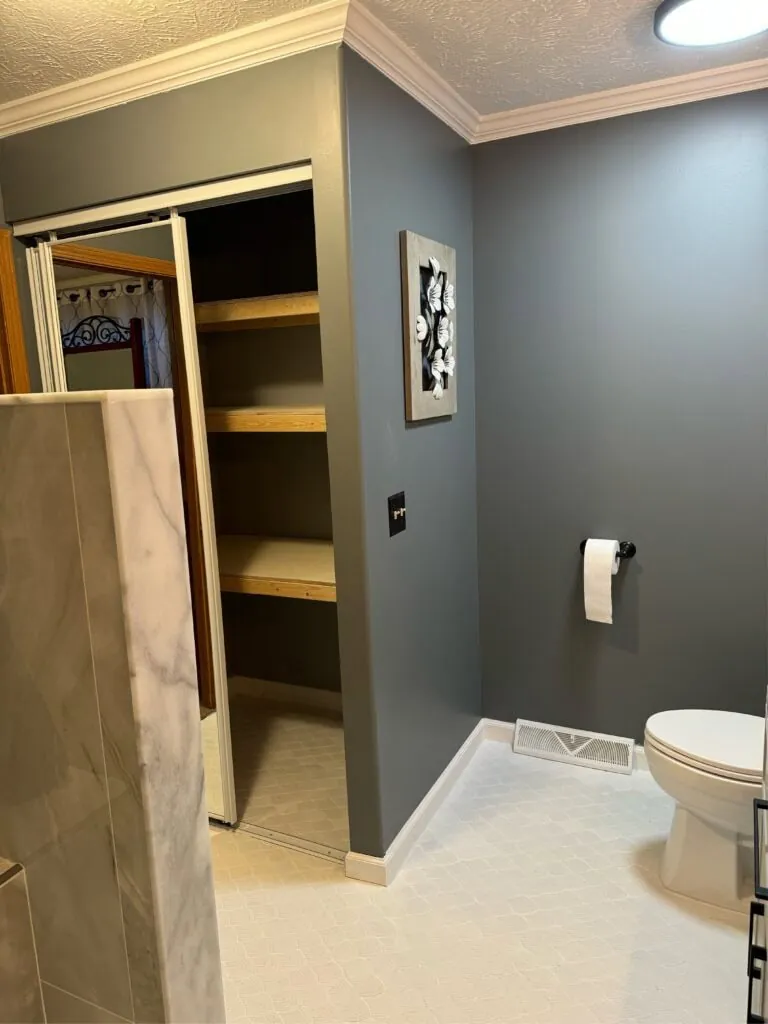
For a real example, our Elkhart bathroom remodel turned an old standing shower into a new closet with a sliding mirror door.
More planning guides: use ChatGPT to plan your renovation vision.