
Start with the conditions affecting the building, then coordinate the visible improvements around them. An active leak or deteriorated opening needs a different priority from a color change. Roofing, siding, windows, doors and outdoor structures can meet at the same details. The right sequence depends on the actual scope, so a universal rule such as always replace one item first can be misleading.
Which problems should be identified before choosing finishes?
Walk the exterior with the contractor and discuss water concerns, damaged materials and known repairs. Distinguish a cosmetic preference from a condition that may affect adjacent work. Ask what investigation is needed before an accurate scope can be prepared. An attractive surface should not conceal a problem that will require reopening the same area after the renovation.
How do different projects affect one another?
Discuss the places where roof edges, wall coverings and openings connect. Identify which work depends on another component being exposed or installed. Ask who coordinates those transitions if multiple crews are involved. The cheapest isolated quote may not represent the best overall plan if its sequence causes completed work to be disturbed a second time.
Can the renovation be completed in stages?
Yes, where a reviewed plan allows each stage to end in an appropriate condition. Define the stopping point, temporary measures and future connection details. Avoid leaving unfinished transitions under the assumption that the next phase will happen immediately. Record what each phase includes and what remains so the household can budget without losing sight of the complete exterior.
A typical order for a full exterior project
Every house is different, but when several exterior projects happen together, this order usually keeps finished work from being disturbed:
- Fix active problems first. Leaks, rot, soft decking, failed flashing and damaged trim come before any cosmetic choice, because they can change the scope of everything after them.
- Roof and roof edges. Roofing work drops debris and involves the drip edge and fascia, so it usually comes before new siding, gutters or paint below it.
- Windows and exterior doors. Replacement openings are flashed and trimmed into the wall. Doing them before or with new siding lets those details be integrated instead of patched around later. See our windows and doors page and the guide to repairing or replacing windows.
- Siding and trim. Once the roof edges and openings are settled, wall coverings and trim can be finished around them. Our guides to siding materials and paint versus new siding help with that choice.
- Gutters and downspouts. These attach to the finished fascia and should direct water away from the foundation, decks and walkways.
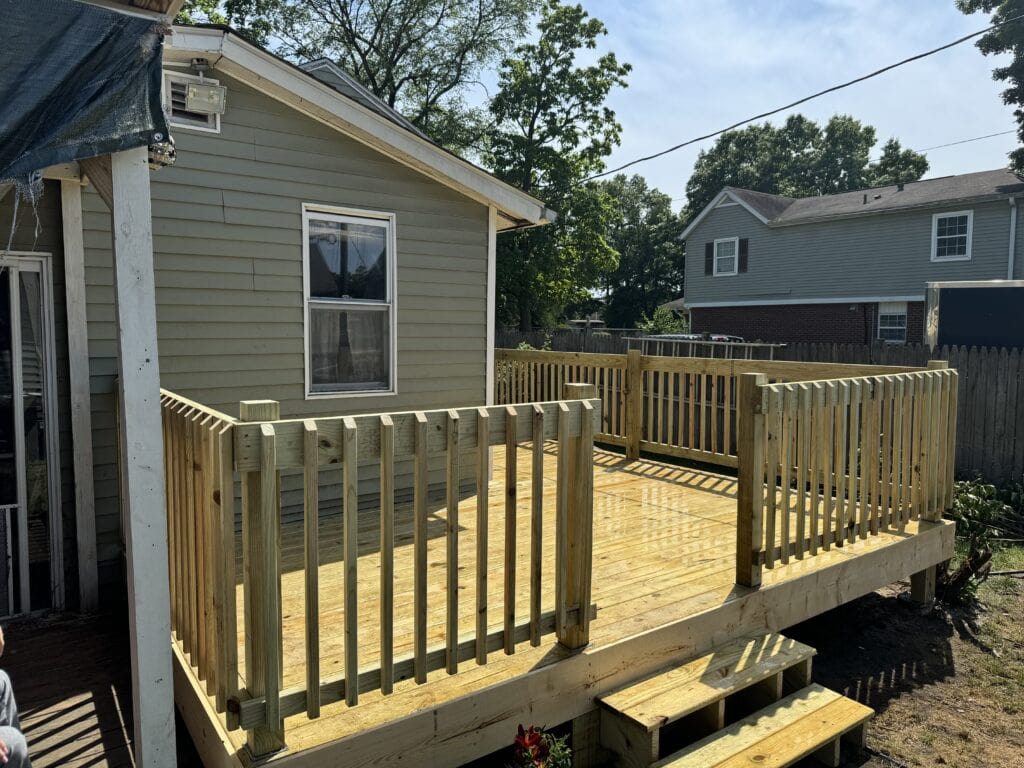
- Decks, porches and steps. Structures that attach to the house connect at the wall, so the wall details around them should already be planned. Compare options in deck, patio or porch.
- Paint, fencing and landscaping last. These are the easiest to damage during heavier work, so they usually finish the project. See choosing a fence material and landscaping on a budget.
The order can change. A leaking window may need attention before a roof that still has years left, and a small project may not need every step. The point is to talk through how the pieces connect before work starts.
Planning around Northern Indiana weather
Freeze and thaw cycles, lake effect snow and spring rain all put pressure on roof edges, flashing and trim. Many homeowners use the winter months to plan and schedule exterior work so materials and timing are settled before the building season. If a problem is letting water in now, ask about temporary protection until the full repair can be done.
Questions homeowners ask
Should I replace windows before or after new siding?
Usually before or at the same time, so the window flashing and trim can be tied into the new wall covering. Replacing windows after new siding often means disturbing finished siding around each opening.
Can I do the roof one year and the siding the next?
Often, yes. Plan the roof edge details with the future siding in mind, and make sure each phase ends with the house fully protected from water.
Who coordinates the different trades?
Ask during the estimate. One contractor coordinating the transitions between roof, openings and siding reduces the chance that one crew undoes another crew’s work.
B&E Home Renovations plans exterior projects across South Bend, Mishawaka, Granger, Elkhart and nearby communities, with free estimates and a lifetime warranty on all work. Call (574) 413-8702.
Bring B&E your repair concerns and appearance goals together. A coordinated plan can help you decide what belongs in the first phase and what can reasonably wait.
Explore B&E exterior renovation planning or contact B&E Home Renovations to discuss your project.